
Proposed Change 2153
Problem
To manage the risks of water-miscible liquid mixtures (WMLMs), the National Fire Code of Canada (NFC) classifies mixtures of methanol, ethanol, 2-propanol, acetone and acetic acid and water according to their flammability or combustibility.
For other WMLMs, the industry often faces stricter storage and handling requirements based on the hazards associated with the pure solvent. These include flammability and combustibility. While adding water to a hazardous solvent can lower these risks, it does not eliminate them. Therefore, stricter guidelines for the pure solvent are usually followed during storage. This means ensuring proper ventilation, using suitable containers, and implementing fire safety and spill containment measures.
These precautions can add costs that could be avoided if the risk posed by the WMLM were properly assessed and the WMLM classified accordingly.
Justification
WMLMs are often used in cosmetics (e.g., 1-propanol), cleaning products (e.g., 1,4-dioxane and tert-butanol), household items (e.g., 1,4-dioxane), and arts and crafts (e.g., morpholine).
Diluting pure solvents with water often reduces their hazard level. To enable Code users to assess their flammability or combustibility and regulate storage, this proposed change would add four WMLMs to the flammability and combustibility classifications in Table A-4.1.2.2. of the NFC: mixtures of 1,4-dioxane, 1-propanol, morpholine, and tert-butanol and water.
The four WMLMs proposed for inclusion in the NFC do not have boiling points below 37.8°C (see Table 1 below). This means none would be classified as Class IA flammable liquids. The most hazardous among them would be classified as Class IB flammable liquids [1].
Table 1. Boiling Point of Solvents Proposed for Inclusion in the NFC
| Solvent | Boiling Point, °C |
| 1,4-Dioxane | 101.2 [1] |
| 1-Propanol | 97.2 [3] |
| Morpholine | 128 [1] |
| tert-Butanol | 82.3 [1] |
This proposed change classifies the four additional WMLMs based on data from closed-cup flash point tests in the literature. The testing data for each WMLM are provided below.
1. 1,4-Dioxane
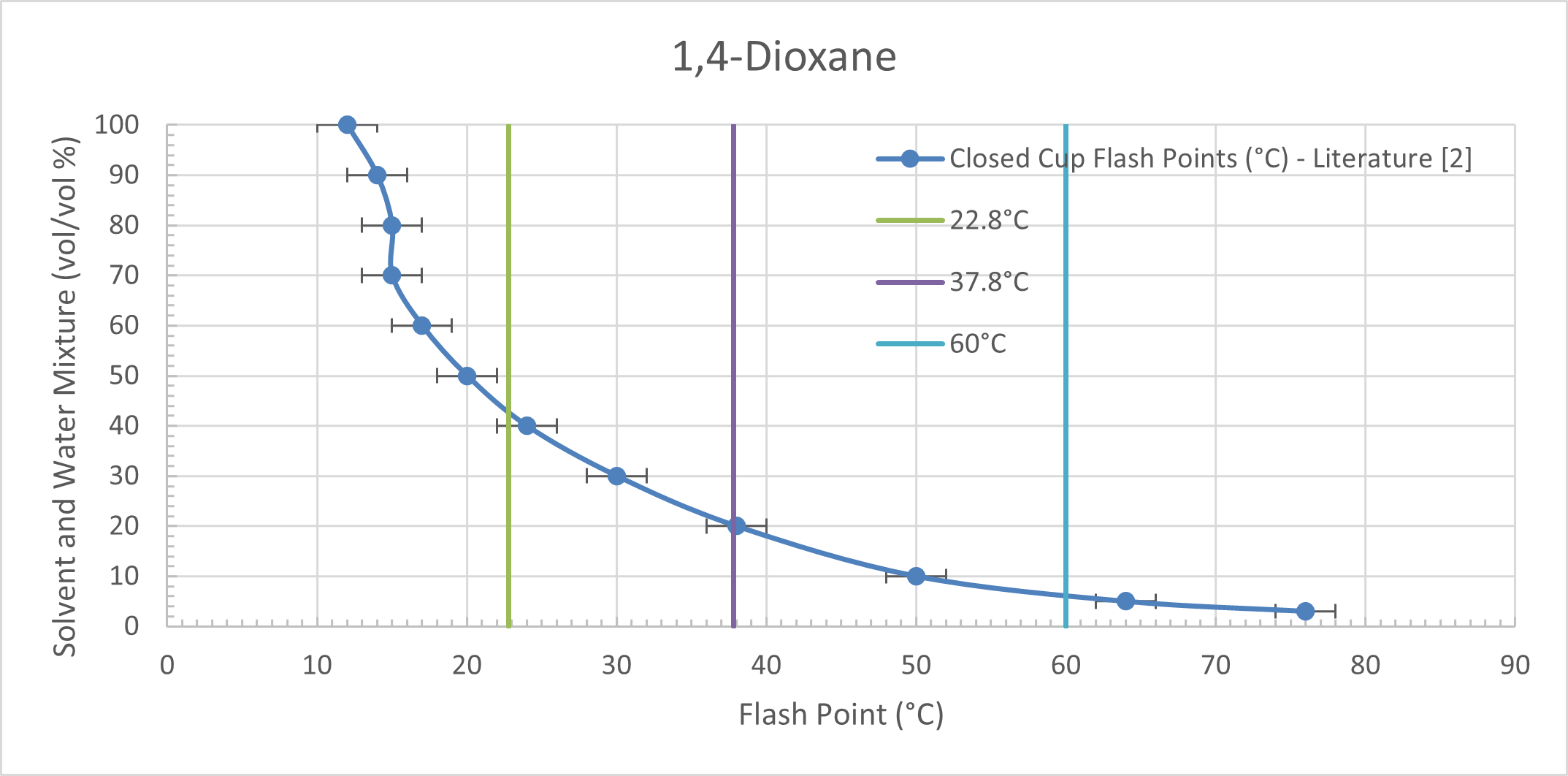
Figure 1. Closed-cup flash points of 1,4-dioxane–water mixture
Table 2. Closed-Cup Flash Points of 1,4-Dioxane–Water Mixture [2]
| 1,4-Dioxane, % v/v | Closed-Cup Flash Point, °C | Uncertainty, +/- °C |
| 100 | 12 | 2 |
| 90 | 14 | 2 |
| 80 | 15 | 2 |
| 70 | 15 | 2 |
| 60 | 17 | 2 |
| 50 | 20 | 2 |
| 40 | 24 | 2 |
| 30 | 30 | 2 |
| 20 | 38 | 2 |
| 10 | 50 | 2 |
| 5 | 64 | 2 |
| 3 | 76 | 2 |
2. 1-Propanol
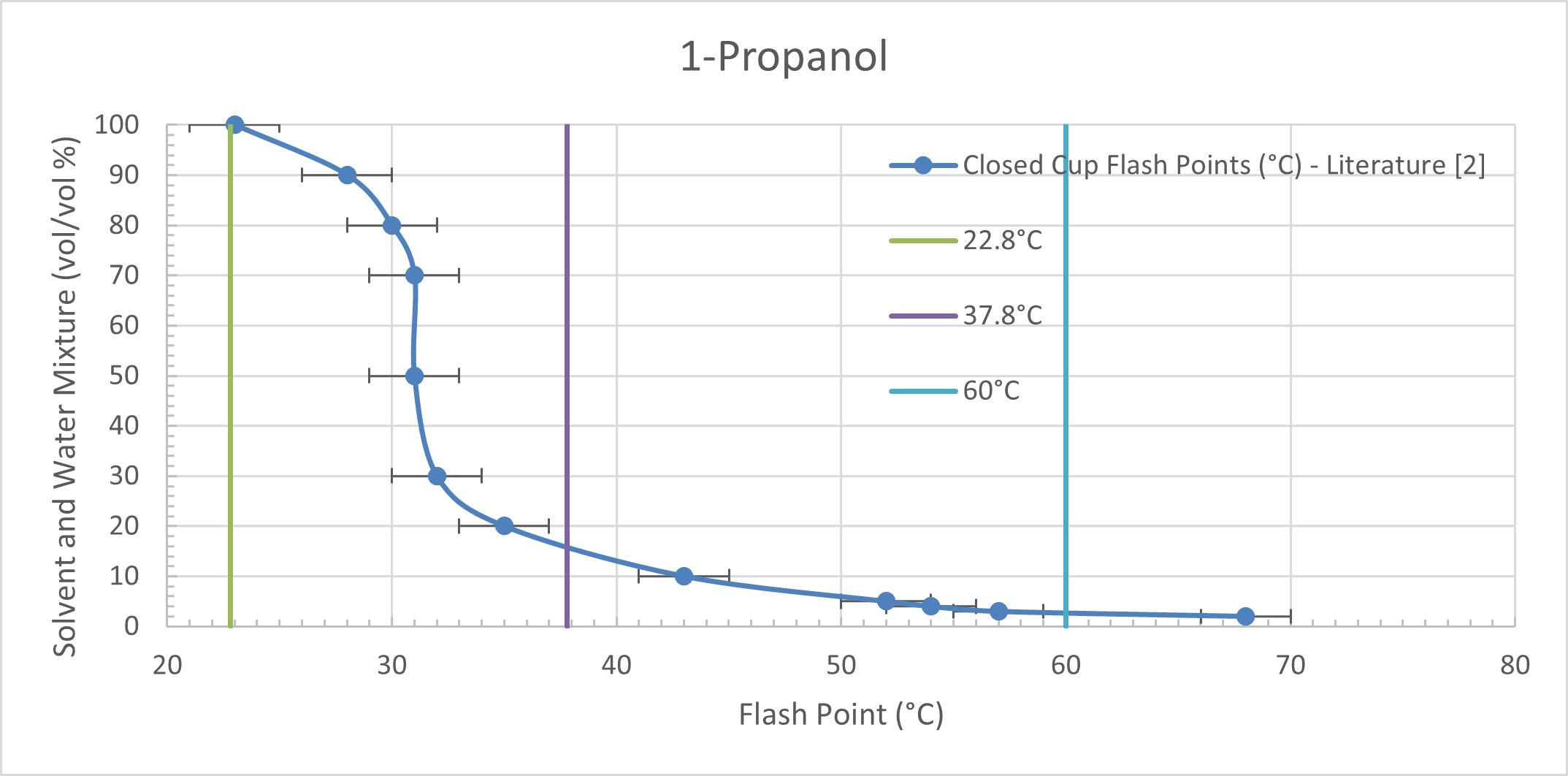
Figure 2. Closed-cup flash points of 1-propanol–water mixture
Table 3. Closed-Cup Flash Points of 1-Propanol–Water Mixture [2]
| 1-Propanol, % v/v | Closed-Cup Flash Point, °C | Uncertainty, +/- °C |
| 100 | 23 | 2 |
| 90 | 28 | 2 |
| 80 | 30 | 2 |
| 70 | 31 | 2 |
| 50 | 31 | 2 |
| 30 | 32 | 2 |
| 20 | 35 | 2 |
| 10 | 43 | 2 |
| 5 | 52 | 2 |
| 4 | 54 | 2 |
| 3 | 57 | 2 |
| 2 | 68 | 2 |
3. Morpholine
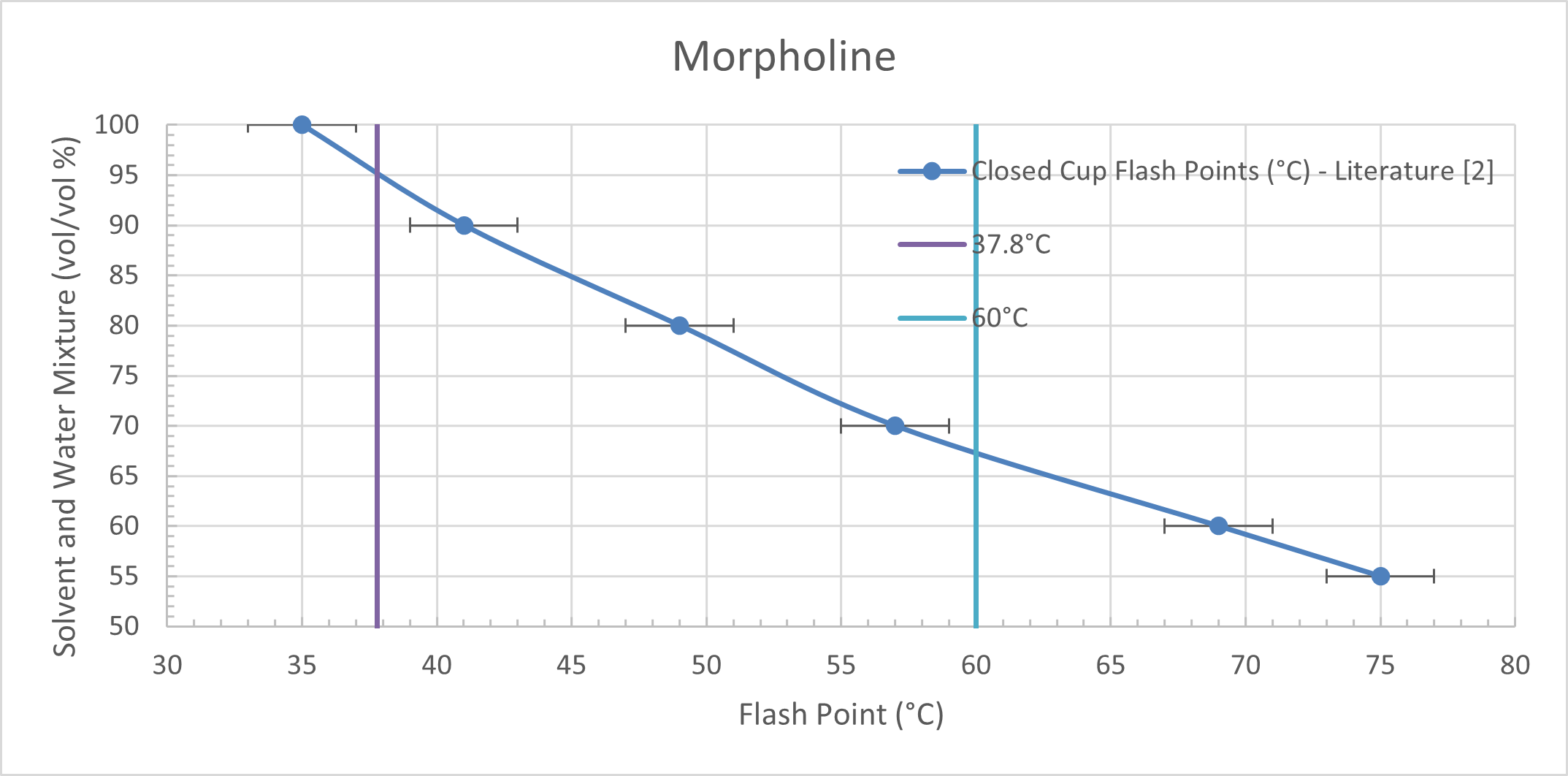 Figure 3. Closed-cup flash points of morpholine–water mixture
Table 4. Closed-Cup Flash Points of Morpholine–Water Mixture [2]
| Morpholine, % v/v | Closed-Cup Flash Point, °C | Uncertainty, +/- °C |
| 100 | 35 | 2 |
| 90 | 41 | 2 |
| 80 | 49 | 2 |
| 70 | 57 | 2 |
| 60 | 69 | 2 |
| 55 | 75 | 2 |
4. tert-Butanol
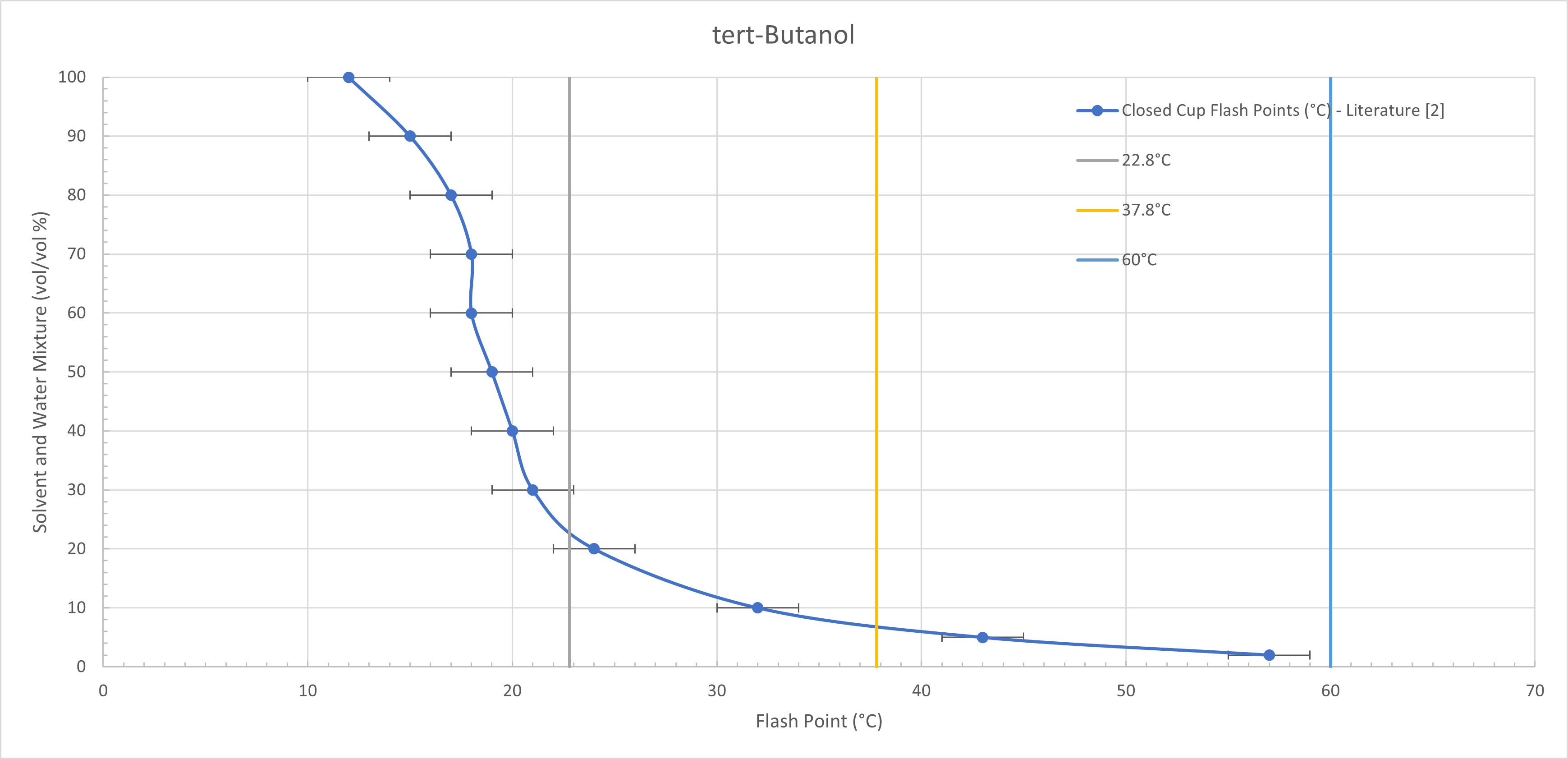 Figure 4. Closed-cup flash points of tert-butanol–water mixture
Table 5. Closed-Cup Flash Points of tert-Butanol–Water Mixture [2]
| tert-Butanol, % v/v | Closed-Cup Flash Point, °C | Uncertainty, +/- °C |
| 100 | 12 | 2 |
| 90 | 15 | 2 |
| 80 | 17 | 2 |
| 70 | 18 | 2 |
| 60 | 18 | 2 |
| 50 | 19 | 2 |
| 40 | 20 | 2 |
| 30 | 21 | 2 |
| 20 | 24 | 2 |
| 10 | 32 | 2 |
| 5 | 43 | 2 |
| 2 | 57 | 2 |
Based on NFC Subsection 4.1.2. and the data from closed-cup flash point tests in the literature, and by interpolating between the relevant data points, the classification of the four new WMLMs in the NFC should be as shown in the revised Table A-4.1.2.2.-2030.
References
[1] Haynes, W. M., Lide, D. R., and Bruno, T. J., CRC Handbook of Chemistry and Physics, 97th Edition, Boca Raton, FL 33487-2742: Taylor & Francis Group, 2016–2017.
[2] Astbury G., Bugand-Bugandet J., Grollet E., and Stell K., “Flash Points of Aqueous Solutions of Flammable Solvents,” IChemE Symposium Series No. 150, pp. 1–18, 2004.
[3] National Center for Biotechnology Information, 1-Propanol. PubChem, National Institutes of Health. https://pubchem.ncbi.nlm.nih.gov/compound/1-Propanol (accessed November 20, 2025)
For more information on these WMLMs, visit the website of the US National Center for Biotechnology Information:
- 1,4-Dioxane: https://pubchem.ncbi.nlm.nih.gov/compound/1_4-Dioxane
- 1-Propanol: https://pubchem.ncbi.nlm.nih.gov/compound/1-Propanol
- Morpholine: https://pubchem.ncbi.nlm.nih.gov/compound/Morpholine
- tert-Butanol: https://pubchem.ncbi.nlm.nih.gov/compound/tert-Butanol
PROPOSED CHANGE
[4.1.2.2.] 4.1.2.2.Water-Miscible Liquid Mixtures
Note A-4.1.2.2.
| Classification | |||
|---|---|---|---|
| Class IB | Class IC | Class II | |
| Volume Concentration Range of the Solvent in Water, % v/v | |||
| Methanol | ≥ 63 (PCF 2145) | ≥ 30 and < 63 (PCF 2145) | ≥ 10 and < 30 (PCF 2145) |
|
|
|||
|
|
|||
|
|
|||
| Ethanol | ≥ 56 (PCF 2145) | ≥ 18 and < 56 (PCF 2145) | ≥ 5 and < 18 (PCF 2145) |
|
|
|||
|
|
|||
|
|
|||
| 1-Propanol | — | ≥ 16 | ≥ 2 and < 16 |
| 2-Propanol | ≥ 41 (PCF 2145) | ≥ 12 and < 41 (PCF 2145) | ≥ 3 and < 12 (PCF 2145) |
|
|
|||
| 1,4-Dioxane | ≥ 43 | ≥ 20 and < 43 | ≥ 6 and < 20 |
| Acetone | ≥ 7 (PCF 2145) | < 7 (PCF 2145) | — (PCF 2145) |
|
|
|||
| Morpholine | — | ≥ 95 | ≥ 67 and < 95 |
| tert-Butanol | ≥ 24 | ≥ 7 and < 24 | ≥ 1 and < 7 |
|
|
|||
Impact analysis
This proposed change may ease the compliance burden for Code users who store and handle these WMLMs. It would also save the one-time cost of flammability or combustibility testing to a classification standard.
Compliance cost savings
Based on their flammability or combustibility classification, flammable and combustible liquids are subject to different requirements regarding the maximum quantity allowed to be stored, clearance distances and location for storage, installation of fire suppression systems, and installation of storage tanks and ancillary equipment, as well as procedures for safe dispensing, loading and unloading. Thus, the cost of Code-compliant storage and handling could be quite different between a Class I and a Class II liquid.
Mixing a flammable or combustible solvent with water may reduce its fire risk such that the resulting mixture falls into a lower hazard classification than the pure solvent. Because the lower classification requires less stringent storage and handling protocols, proper classification of WMLMs could significantly reduce costs. Due to the variety of real-life situations, however, the exact or average compliance cost savings cannot be calculated.
For example, 1,4-dioxane—which is widely used as a substitute for methylene chloride in paint stripper formulations because of its lower volatility—is classified as a Class IB liquid in its pure form, but when it is diluted with water to less than 20% by volume, the resulting WMLM falls under Class II. According to NFC Sentence 4.2.5.2.(2), the maximum quantity of the diluted 1,4-dioxane and water mixture (Class II) that is allowed to be stored in mercantile occupancies that are not sprinklered is 8 L/m2 of the total area of the suite, up to an absolute maximum 8 000 L, while the maximum quantity of pure 1,4-dioxane (Class IB) permitted to be stored is 0.3 L/m2 of the total area of the suite, up to 300 L. The classification of the 1,4-dioxane and water mixture would therefore allow a greater quantity of less than 20% by volume 1,4-dioxane and water to be stored in a single mercantile suite, which would provide some relief for business owners with limited space who need to store large amounts of diluted 1,4-dioxane.
Classification testing cost savings
Currently, the classification of WMLMs not covered in Article 4.1.2.2. can be determined by measuring their closed-cup flash points in accordance with Subsection 4.1.3. and classifying them in accordance with Sentences 4.1.2.1.(2) and (3).
The cost to perform a standardized flash point test in accordance with Subsection 4.1.3. can vary significantly, starting at approximately $150 with the final cost depending on the lab, raw material type, number of samples, and required turnaround time [1][2].
References
[1] Petro-Lubricant Testing Laboratories, Inc., ASTM D56: Flash Point by Tag Closed Cup, https://www.petrolube.com/price-list-catalog/astm-d-56a-10927/.
[2] MaTestLab, ASTM D56 Standard Test Method for Flash Point by Tag Closed Cup Tester, https://matestlabs.com/test-standards/astm-d56/.
Enforcement implications
This proposed change could be enforced by the infrastructure currently available.
Who is affected
Regulators, engineers, building owners, contractors, fire services and certain businesses using WMLM.
OBJECTIVE-BASED ANALYSIS OF NEW OR CHANGED PROVISIONS
- Date modified: